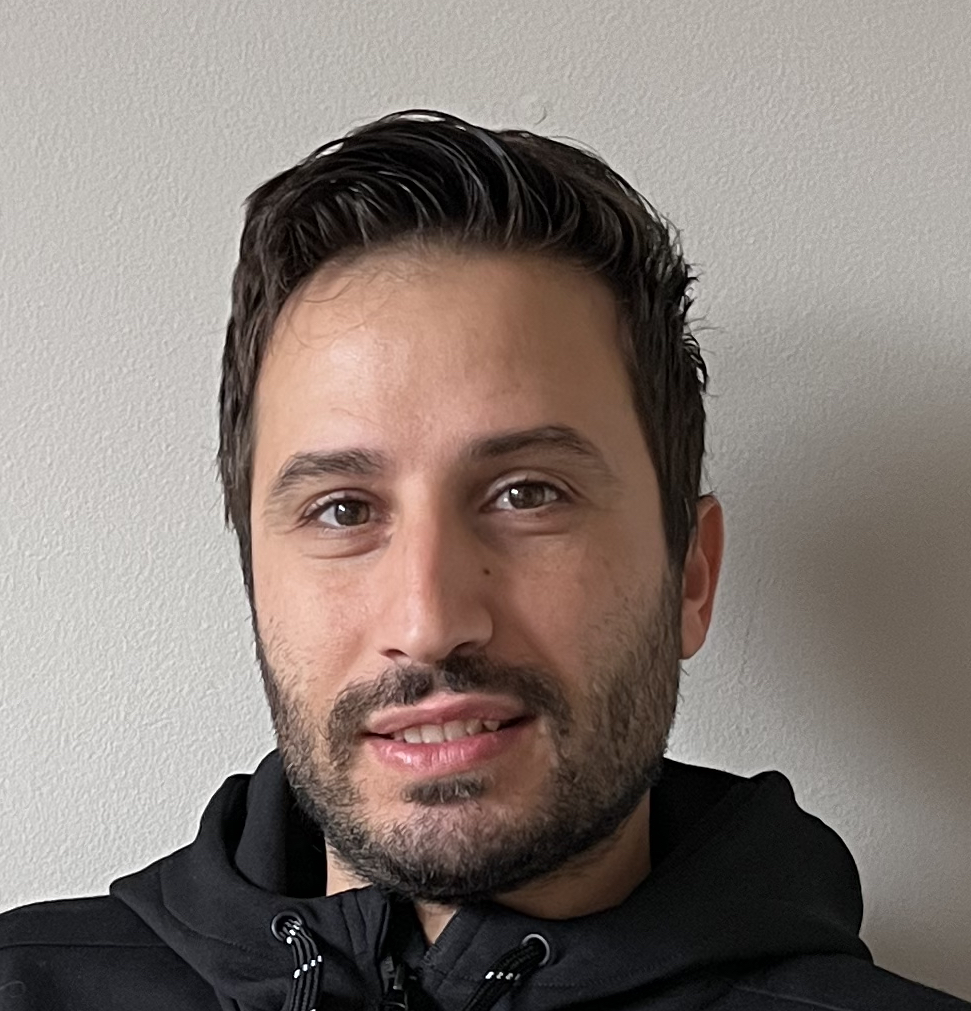
Paris Giampouras
Assistant Professor, Department of Computer Science, University of Warwick
Research Scientist (part-time) at FAIR, Meta AI
Foundations and algorithms for reliable, adaptive AI.
I develop theory and algorithms for learning useful representations, aligning generative models, and adapting AI systems, drawing on optimization, probabilistic inference, and structured low-rank models.
University of Warwick · Meta FAIR
I am an Assistant Professor of Machine Learning and AI in the Department of Computer Science at the University of Warwick, where I am a member of the Foundations of AI and Machine Learning (FAM) division. I am also a part-time Research Scientist at FAIR, Meta AI within Meta Superintelligence Labs, and an Affiliated Researcher at the Archimedes AI Research Center.
Previously, I was a Research Faculty member at the Mathematical Institute for Data Science (MINDS) at Johns Hopkins University, where I held a Marie Skłodowska-Curie Global Fellowship from 2019 to 2022.
Optimization & Structured Learning
Low-rank matrix factorization, tensor decompositions, nonconvex optimization, and Bayesian and variational inference, with algorithms and theoretical guarantees for efficient and robust learning.
Generative Models & Alignment
Representation learning, post-training, and alignment of diffusion and flow-based models, with applications to inverse problems, controllable generation, and scientific imaging.
Continual Adaptation & AI Agents
Continual learning and parameter-efficient adaptation of LLMs, alongside AI research agents, test-time reasoning, and automated machine-learning experimentation.
My research connects the mathematical foundations of learning with the adaptation and alignment of modern AI models. I combine theoretical analysis, algorithm design, and empirical evaluation to understand how models acquire useful representations, adapt efficiently to new tasks, and retain previously learned knowledge. My work on low-rank matrix factorization, tensor decomposition, and optimization complements my research on generative models, robust probabilistic inference, and continual learning.
At Meta, my work includes contributions to the post-training pipeline for Muse Glimmer, an open-weight language model, and research on AI agents for automated machine-learning experimentation. My current interests include continual and parameter-efficient adaptation of LLMs, post-training of diffusion and flow models, and agents that use reasoning, feedback, and experimentation to improve their research decisions.
Examples of my work include:
- Representation alignment: Align & Invert (NeurIPS 2026) applies alignment with pretrained visual encoders at inference time to improve image reconstruction with diffusion and flow models.
- Causal abstraction and transportability: Distributionally Robust Causal Abstractions (ICML 2026) and Generalised Transportability via Causal Abstractions (2026) develop theory and algorithms for robust causal modelling and transferring causal conclusions across environments and populations.
- Efficient foundation-model training: DES-LOC (ICLR 2026) develops adaptive optimizers that reduce communication costs while preserving convergence guarantees.
- Continual learning: The Ideal Continual Learner (ICML 2023) provides a theoretical framework for learning sequential tasks without catastrophic forgetting.
RAISE Lab develops foundations and algorithms for Reliable, Adaptive, and Self-Improving AI. Our research brings together optimization and structured representations, generative-model alignment, continual adaptation, and AI research agents. Learn more about the lab.
I co-organized the ReALM–GEN workshop at ICLR 2026, bringing together researchers working on constrained and preference-aligned diffusion and flow-based generative models. Workshop material is available on the ICLR virtual platform.
I also co-organize the Foundations of AI Seminar series at Warwick. Prospective speakers are welcome to get in touch.
I welcome enquiries from prospective students and collaborators interested in optimization and structured learning, generative models, continual adaptation, or AI research agents. Please contact me to discuss potential research opportunities.
news
| Oct 21, 2026 | I’m delighted to share the technical report for Muse Glimmer 30B, Meta’s open-weight model for on-device AI agents with multi-step reasoning, tool use, and multimodal understanding. As a core contributor, I focused on the model’s post-training pipeline. |
|---|---|
| Oct 9, 2026 | I’m delighted that our paper, Align & Invert, has been accepted to NeurIPS 2026! We use representation alignment at inference time to guide image reconstruction with diffusion and flow-based models. Congratulations to my PhD student, Loukas Sfountouris, on his first PhD paper, and many thanks to Giannis Daras for the collaboration! |
| Sep 11, 2026 | I was delighted to give an invited talk, “Semantic Alignment for Robust Representations in Deep Generative Models,” at the MARS Annual Symposium at Lancaster University on 11 September 2026. Many thanks to the organizers for the invitation! |
| Aug 16, 2026 | Our new paper, Generalised Transportability via Causal Abstractions, uses causal abstraction to study how causal conclusions can transfer across populations. We provide quantitative guarantees for approximate transportability, including settings without target data. |
| Jun 24, 2026 | I was delighted to co-organize the BMVA Symposium on Continual AI: Learning to Adapt in a Continuous World, held in London on June 24, 2026! Check the website for the videos of the talks! |